


The Box Score — Key Takeaways
- Choose one goal before entering the cage and decide what the hitter should notice.
- Begin with a task the athlete understands, then add difficulty only when it serves the goal.
- Build breaks, setup checks, and reflection into the session rather than filling every minute with swings.
- A tee, front toss, and machine work are options to discuss with a coach, not stages every hitter must complete.
- At Elevate, cage access mainly comes through training and team programs. Confirm current individual availability before making plans.
The rain has settled in, your child’s bat is in the car, and you’ve found time for indoor work. Once you’re beside the net, the question becomes what to do with the session. Another bucket of swings is an easy answer when nobody has chosen a goal.
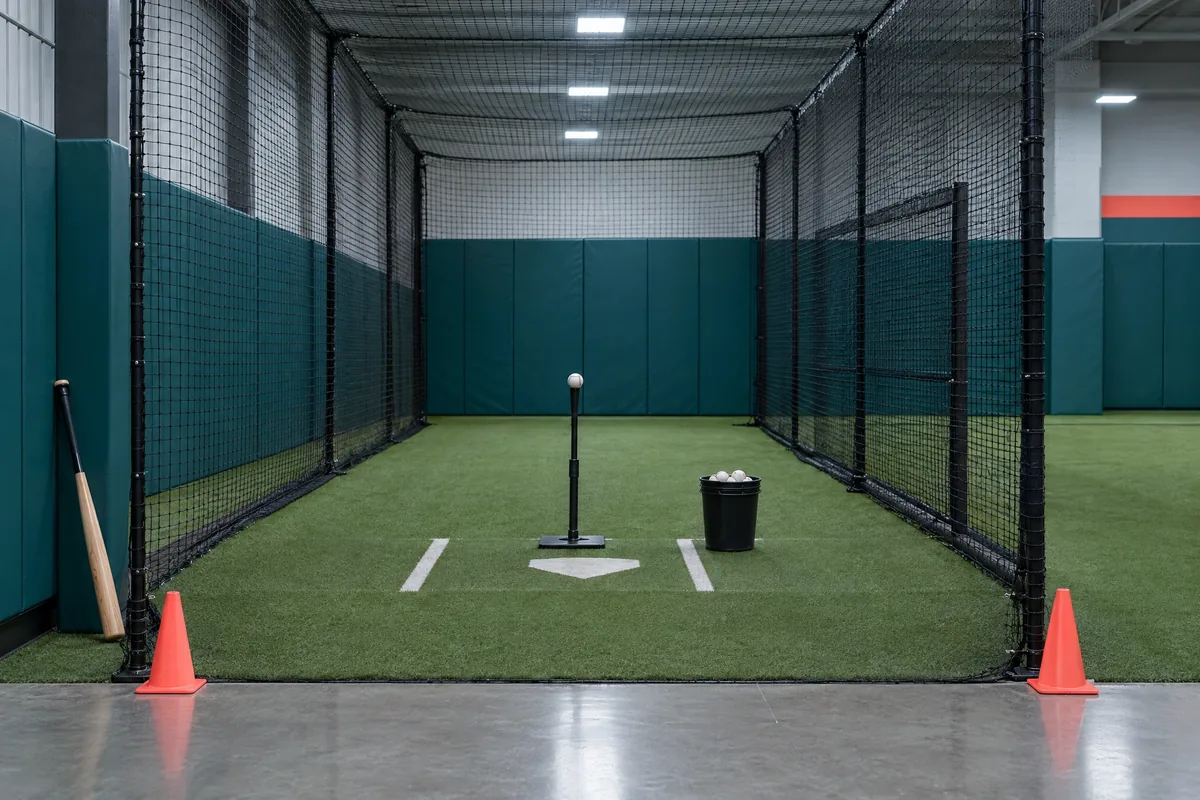
A batting cage practice plan starts with a purpose before the first ball is hit. Start with the assignment your athlete already has, choose a manageable setup, and leave time to notice whether they can use it when the task changes.
At our academy, Elevated Performance Academy (EPA), we want hitters to understand what they’re working on. A parent can support that by helping organize the session and leaving technical instruction with the coach.
Choose the goal before choosing the drill
Ask your player what their coach wants them to practice. The answer might involve recognizing contact, being ready for the ball, or making a decision about which pitch to swing at. Write the task in the athlete’s words.
If the answer is “fix everything,” ask the coach for a starting priority. Our instructor directory can help you find someone to discuss a focused hitting question.
Agree on what the hitter will notice
A goal needs an observation the player can make. For example, an instructor might ask the athlete to describe where the ball met the bat during an assigned drill. Let the coach determine whether that task fits the child.
Our swing fundamentals guide explains the broader skill. Keep the cage session focused on the particular assignment instead of trying to teach the whole swing at once.
Check what the booking allows
Confirm which space, equipment, and activities are included. Ask who may operate a machine, where a feeder must stand, and whether a parent can enter the cage. Follow staff instructions and the facility’s posted rules.
Our batting cage information page explains how access works at Elevate. Open or individual availability varies by location and season. Don’t assume you can arrive for an hourly rental without confirmation.
An example 30-minute session to discuss with your coach
The timetable below is an illustration, not an EPA class schedule or a universal workout. It includes preparation and pauses, so 30 minutes does not mean 30 minutes of hitting. Change or stop the plan when the athlete, assignment, or facility requires it.
| Time | Purpose | What to do |
|---|---|---|
| Minutes 0 to 5 | Prepare the space and athlete. | Follow the coach’s warm-up, check equipment, and review the goal. |
| Minutes 5 to 12 | Revisit a familiar task. | Use the assigned setup, with short rounds and pauses to describe what happened. |
| Minutes 12 to 15 | Pause and check understanding. | Rest, drink, and decide whether the task should stay the same or become simpler. |
| Minutes 15 to 24 | Add one appropriate challenge. | With coaching guidance, change a feature such as ball delivery or a swing decision. |
| Minutes 24 to 30 | Review and finish. | Record one observation, identify a question for the coach, and clear equipment safely. |
A younger player or someone learning a new task may need a shorter session and more explanation. An experienced athlete may have a different plan already. Ask their instructor which parts of this example belong in the next practice.
Minutes 0 to 5: prepare before anyone swings
Begin with the warm-up the coach has assigned and enough room to do it safely. Check that the hitting area is clear, equipment is in good condition, and everyone knows where to wait.
The American Academy of Pediatrics’ baseball and softball safety guidance includes proper warm-up, suitable protective equipment, and a safe environment. Apply those expectations to practice as well as games.
Keep waiting players out of the swing area
Only begin after the person supervising confirms that everyone is positioned safely. A sibling collecting balls or a parent adjusting a camera should never have to guess whether a swing is coming.
Use the facility’s procedure for stopping the activity before retrieving balls or changing equipment. If you’re unsure, ask staff to demonstrate it.
Minutes 5 to 12: begin with the assigned task
Use a setup the athlete has been shown. A tee may allow them to work on an agreed contact task; another assignment may use a different delivery. Ask the instructor to choose the setup and explain how to adjust it.
Little League’s fundamentals series includes an introduction to hitting equipment and movement. It can help a new family learn the terms before discussing an assignment with a coach.
Pause long enough to answer a question
After a short round, ask the hitter what they noticed. Avoid giving a running commentary on every swing. If the athlete can’t explain the task, stop and clarify it before adding more attempts.
Keep the observation connected to the assignment. A ball hit into the net may feel satisfying, but the player still needs to know whether they tried the adjustment the coach asked for.
Let the parent handle the organization
You can manage the water break, keep the area clear, and help record a question. Technical corrections can wait for the instructor, especially when you are unsure what caused a miss.
For softball hitters, our softball hitting lesson guide explains the same expectation of a clear task and understandable feedback. The practice conversation should stay specific to the athlete.
Minutes 12 to 15: rest and check the task
Build the pause into the plan. Ask whether the player understands what they are trying, needs another demonstration, or is becoming tired or uncomfortable. Don’t wait for the bucket to be empty to have that conversation.
If the task has become confusing, return to something simpler that the coach has approved. Report pain to the supervising adult and stop the activity rather than trying to finish the timetable.
Decide whether another challenge is appropriate
A hitter who is still learning the setup may benefit from keeping it unchanged. Moving to faster delivery should have a reason tied to the goal. Ask the coach how they decide the player is ready.
There is no requirement to use every piece of equipment in the building. The session can finish with the same tool it started with if that is what the assignment calls for.
Minutes 15 to 24: change one part of the task
When the instructor considers it appropriate, add a challenge that lets the hitter use the skill in a different setting. That might involve a different delivery or deciding whether a ball belongs in the chosen hitting area.
Keep the change small enough that the athlete can explain it. If both the delivery and the instruction change at once, ask the coach how the player should judge the attempt.
Use front toss only with a suitable setup
Have a qualified instructor demonstrate the feeder position, protective screen, delivery, and stop signal. Follow facility rules. Parents should not improvise a throwing position inside a cage while a child swings.
If you lack the setup or permission, stay with another approved task. Front toss is an option, not a requirement for completing this example session.
Machine work requires permission and supervision
Ask staff who can operate the machine and which settings are appropriate. Keep the speed and task within the instructor’s directions. Stop before anyone enters the lane or changes the equipment.
Our hitting program gives families a way to explore coached work when they want help selecting and adapting practice tasks. Check current offerings for the age group and location.
Use measurements for the question the coach has chosen
If the session includes a measurement tool, ask what information the instructor wants from it. You don’t need to turn each swing into a test. The player should still be able to describe their attempt without a screen.
Our data-driven training article explains how we think about feedback tools. Keep that discussion separate from deciding which task belongs in today’s session.
Minutes 24 to 30: finish with an observation
Ask the hitter what they could recognize by the end that felt unclear at the beginning. Write it down using their words. If something remained confusing, record the question for the instructor.
End while the athlete can still follow the safety routine and help put equipment away. The example’s final minutes are available for review and cleanup; they do not need to be filled with extra swings.
Fit the next session around the whole week
Check team practices, games, other instruction, and the player’s willingness to practice. Our hitting lesson frequency guide covers that longer-term scheduling question.
Choose a Seattle-area facility based on the current offering and the trip your family can manage. Confirm availability through the booking listing before leaving home.
Common questions
How many swings should a young hitter take?
Ask the coach to set the task and amount of work for the athlete. Age, experience, recent activity, and the quality of the attempts all belong in that conversation. Avoid making an arbitrary swing total the reason to keep going.
Does every cage session need machine pitching?
No. The assignment may use a tee, another approved delivery, or movement without hitting a ball. Use equipment because it serves the goal and the player is ready for it.
Can a parent run this plan without a coach?
Use only tasks and safety procedures you have been shown and are allowed to supervise. The timetable is a planning example, not training in machine operation or live feeding. Ask for instruction when the setup is unfamiliar.
Does the same timetable work for softball?
The preparation, practice, pause, and review structure can be discussed with a softball instructor. Equipment, delivery, and assignments must suit that athlete and sport. The example is not a universal softball workout.
Can we book a cage by the hour at Elevate?
Cage time mainly comes through training and team programs. Open or individual availability varies, so check the current portal or contact the facility. Don’t assume an unlisted rental option is available.
Before the next session, ask the coach for one task, one observation, and the setup it requires. Put those on your practice note so the hitter knows why they are stepping into the cage.

EXPERT REVIEWER
Wade Perkins
Co-Founder and Managing Director, Elevate Northwest
Wade Perkins co-founded Elevate Northwest and serves as its managing director. He holds a B.S. in Biology from Oregon State University, along with sports management and sports coaching certifications from the United States Sports Academy.
His credentials also include NASM’s Performance Enhancement Specialist and Youth Exercise Specialist, ISSA’s Certified Tactical Conditioning Specialist and Exercise Recovery Specialist, Applied Functional Science through the Gray Institute, Rapsodo and Driveline certifications, and the Florida Baseball ARMory SAVAGE Pitching Coaches Certification.