


The Box Score — Key Takeaways
- “Develop the whole athlete” is a phrase most programs use and few explain. The test is whether it shows up on the practice plan.
- A whole-athlete practice covers four things: how the body moves, how the skill is built, how the athlete thinks under pressure, and how they treat people.
- None of those need extra time. They need named time inside the practice you already run.
- The character and mental-game work is taught, not hoped for. It gets a slot, a coach, and a repeatable cue.
- Signs it is working show up in behavior, not the box score: a player asking a question, restarting after an error, helping a teammate warm up.
Every youth program in the Puget Sound area says it develops the whole athlete. Almost none of them will show you what that changes about Tuesday’s practice.
That is a fair thing for a parent to ask about. A whole athlete approach is either written into the plan, with time and a coach attached, or it is a line on a website.
Here is what it looks like on an actual practice plan at Elevate Northwest, and what you can watch for at any program you are considering.
What does “develop the whole athlete” mean?
It means treating a young player as an athlete, a learner, and a person, and building practice so all three get attention.
The narrow version of coaching treats a player as a set of skills: swing, throw, field, run. Those matter, and we spend most of practice on them. The problem is that the skills stop transferring when the athlete is tired, anxious, growing too fast for their coordination, or convinced the coach has given up on them.
The wider version adds three things on top of the skill work. Physical development keeps the body able to hold up and keep improving. Mental skills let an athlete use what they know when the moment is hard. Character is what makes a player worth having in a dugout.
The four parts, and what each one is for
Physical development
Movement quality, strength for their age, and the ability to repeat a motion without breaking down. For a nine-year-old this is skipping, crawling, sprinting, and changing direction. For a sixteen-year-old it is structured strength work.
The National Strength and Conditioning Association’s position on long-term athletic development puts movement competence and foundational strength ahead of specialized training, and that ordering holds up in a cage as much as a weight room.
Technical skill
The swing, the throwing pattern, footwork, receiving. This is what most people picture when they picture practice, and it stays the largest block.
Mental skills
Attention, a reset after a mistake, decision-making, and how an athlete talks to themselves. These are teachable. We cover the approach in our post on handling pressure and failure.
Character and team behavior
How a player treats a struggling teammate, whether they can take a correction, whether they do the unglamorous job. Our Elev8 Culture Code is required learning for every coach and team, and we share it with parents, because shared expectations only work when the adults have the same list.
A 90-minute practice, block by block
This is the shape of a typical Academy or select team practice. Times shift with the age group and the facility, and the plan changes through the season. What does not change is that every block has a purpose beyond filling the clock.
Minutes 0 to 10: movement prep
This is a short sequence of skipping, crawling, sprinting, and changing direction rather than a stretching circle. It gets the body ready and quietly builds coordination. Younger groups get more variety, older groups get more intensity.
Minutes 10 to 15: the day’s one idea
The coach names what today is about, in a sentence a ten-year-old can repeat. “Today we get our feet set before we throw.” One idea per practice. If an athlete cannot tell you what practice was about on the ride home, it was not named clearly enough.
Minutes 15 to 50: skill blocks
The main technical work, usually two or three stations. Athletes rotate. Coaches teach the day’s idea inside whatever the station is, so a hitter and an infielder hear the same principle in different settings.
This is also where measurement fits, when it fits. Our hitting groups use video and swing data here, and the tools available vary by location.
Minutes 50 to 70: competitive reps
A game-like situation with a score. Somebody wins. This is where mental skills get trained, because a player who can execute in a quiet cage and not in a competitive drill has a different problem than a mechanical one.
Coaches add one demand at a time. A runner on first. A count. A time limit. If the athlete falls apart on both the skill and the situation, the coach drops the situation and teaches the skill again.
Minutes 70 to 80: the hard thing
One block where the athlete is asked to do something they are not yet good at. Opposite-field contact, a barehand play, a pitch they do not trust. Failure is expected here and the coach says so out loud beforehand.
This block does more for character than any speech. A player learns that being bad at something in front of teammates is survivable.
Minutes 80 to 90: review and a question
Players say what they worked on and one thing they want to carry into the next practice. Coaches close with the same question every time so it becomes a habit.
The review is short. Two minutes of players talking beats ten minutes of a coach summarizing.
What changes by age
The four parts stay the same. The proportions move.
At 8U to 10U, most of practice is movement, fun, and broad skill exposure, and the mental-game work is as simple as naming a feeling and giving one next action. Our development academy teams are built around this stage.
At 11U to 13U, competitive reps take more of the plan and athletes start owning their own routine. This is also when growth spurts scramble coordination, so the physical block matters more, not less, even though the athlete looks bigger.
At 14U and up, strength work becomes structured, the athlete should be able to run their own warm-up, and the character conversations get more direct. An older player can handle “you were short with your catcher today” without it becoming a crisis.
How do you know it is working?
You look at behavior across weeks, not results across a weekend.
The signs we watch for:
- The athlete can say what they are working on, in their own words.
- They get back into position sooner after a mistake.
- They ask a coach a question instead of waiting to be told.
- They help a teammate who is having a bad day.
- They are still willing to try the thing they are bad at.
None of that shows up in a box score, and all of it predicts whether a kid is still playing at sixteen. The American Academy of Pediatrics links burnout and dropout to programs built around adult expectations and year-round intensity rather than the athlete’s own development, in its guidance on overtraining in young athletes.
What a whole athlete approach is not
It is not a softer version of competition. Our teams keep score, athletes get cut from tryouts, and coaches correct players directly. The Aspen Institute’s Project Play makes the same point in its design for development guidance, where age-appropriate does not mean undemanding.
Skill work does not shrink either. Skill blocks are still the largest part of practice, because a player who cannot field a ground ball will not enjoy the game no matter how good the culture is.
And no program can add this by writing a values statement. If the coaches cannot name what they taught this week beyond the mechanics, nothing has been added.
What to watch for at a practice
Most programs will let you watch. Go, and pay attention to a few specific things.
Listen for whether the coach names one idea and comes back to it. Watch what happens after a player makes an error, which tells you more about the culture than any conversation with a director. Notice whether the quietest kid on the field gets coached as much as the best one. Check whether practice ends with players talking or a coach lecturing.
If you are still narrowing down programs, our guides to choosing a travel baseball program and why team culture matters cover the rest of the questions worth asking.
Common questions
Does whole athlete development mean less skill work?
No. Skill work is still the biggest block on the plan. The other parts are built into how that block is run, and into two shorter blocks at the start and end of practice. Total practice time does not change.
How is character taught at practice rather than just talked about?
By giving it a slot and a task. A block where athletes are expected to fail in front of each other, a review where players speak, a coach who corrects behavior toward a teammate as directly as a mechanical error. Our Elev8 Culture Code gives coaches a shared list so the standard is the same across teams and facilities.
My athlete plays a second sport. Does that fit a whole athlete approach?
It fits it well. Playing more than one sport builds movement variety and gives an athlete time away from one set of demands. Our coaches plan around school and other sports rather than treating them as competition for attention.
What age should this start?
The approach applies from the first season. What changes is how much the athlete owns. A seven-year-old needs an adult to name the feeling and give the next step. A fifteen-year-old should be running their own warm-up and choosing their own focus.
How do I ask a coach about this without sounding difficult?
Ask what your athlete is working on this month, and how the coach will know it worked. It is a normal question, and the answer tells you whether there is a plan behind the practice. Our post on the parent’s real job covers where that line sits.
Ask to watch a practice before you commit a season to a program. Ten minutes of standing by the fence will tell you more than any brochure.
See how our teams and training programs are built, or get in touch to talk about where your athlete fits.tart.
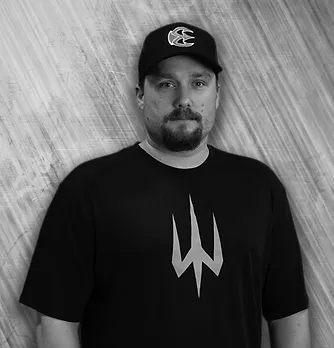
EXPERT REVIEWER
Wade Perkins
Co-Founder and Managing Director, Elevate Northwest
Wade Perkins co-founded Elevate Northwest and serves as its managing director. He holds a B.S. in Biology from Oregon State University, along with sports management and sports coaching certifications from the United States Sports Academy.
His credentials also include NASM’s Performance Enhancement Specialist and Youth Exercise Specialist, ISSA’s Certified Tactical Conditioning Specialist and Exercise Recovery Specialist, Applied Functional Science through the Gray Institute, Rapsodo and Driveline certifications, and the Florida Baseball ARMory SAVAGE Pitching Coaches Certification.